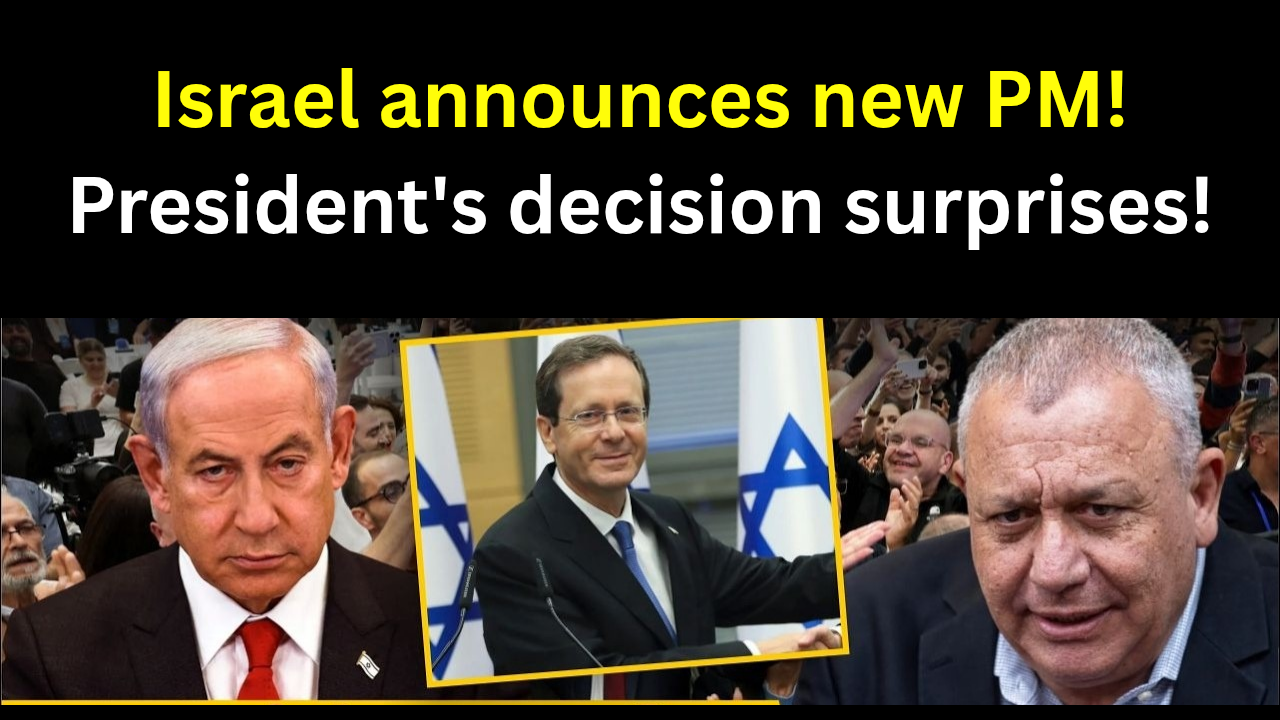
The political arithmetic in Israeli politics is changing rapidly, and Prime Minister Benjamin Netanyahu is facing a major challenge to save his power. Gadi Eizenkot, a political rival and leader of the National Unity (Yesh Atid/National Unity faction contextually referenced) party, is receiving support from opposition parties to form a government.Israel’s Arab party, the Joint List, has also announced its support for Eizenkot. The party decided to recommend Eizenkot as the next Prime Minister to President Isaac Herzog.
Earlier, the Ra’am party had also announced its support for Eizenkot, creating new political equations in the opposition camp against Netanyahu. However, the final process of government formation is still pending.The Numbers GameIn Israel’s 120-member parliament (Knesset), any coalition needs the support of at least 61 members to form a government. Based on available seat data: * Eizenkot-led alliance: 48 seats * Joint List: 11 seats * Ra’am Party: 8 seats * Total Combined Support: 67 seats (6 seats above the majority threshold of 61)Key Developments * Joint List’s Stance: Reaching a consensus among its three factions, the Joint List stated that this decision was made in response to the public demand to prevent Netanyahu and his government from returning to power. They believe supporting Eizenkot is necessary to strengthen the possibility of a regime change and reduce the likelihood of a hybrid government where Netanyahu could retain power in some form. *
Ra’am Party’s Position: Ra’am leader Mansoor Abbas has also recommended Eizenkot’s name to the President. On November 5, during discussions, Abbas supported the complete disarmament of Hamas—one of the key conditions set by Eizenkot for joining the coalition. Regarding designating Hamas as a terrorist organization, Abbas emphasized that instead of labeling Arab society and citizens as supporters of terrorism or traitors, the path of dialogue and cooperation should be adopted, calling Arab citizens a bridge in Israel that should not be broken. * The President’s Role: Israeli President Isaac Herzog holds the most crucial role in this entire sequence. After completing talks with all political parties, the President stated on November 5 that 67 MKs recommended Eizenkot, while 46 backed Netanyahu.
However, the President clarified that government formation capability is not determined by numbers alone, as internal differences and mutual objections within the blocs could pose hurdles.President Herzog stated that he would task a Knesset member with forming the government following further consultations with party leaders. Since no single alliance won an outright majority in the elections, Arab party support has become vital for Eizenkot. Meanwhile, Netanyahu’s camp is also making efforts to form a government. While 67 recommendations have shifted the political landscape, it is premature to assume a new government has been formed until the President makes his formal assignment.